
Vermont Adaptive Ski & Sports is a nationally recognized organization that empowers people of all abilities through inclusive sports and recreational programming regardless of ability to pay. In addition to sports, year-round programming options integrate environmental, holistic wellness, and competitive training philosophies for people of all ages with cognitive, developmental, physical and emotional disabilities.
We are recognized nationally for our client-centered programs and for providing access and instruction to sports and recreational activities with the belief that these things provide a physical, mental and social experience that is immeasurable in promoting self-confidence and independence in an individual.
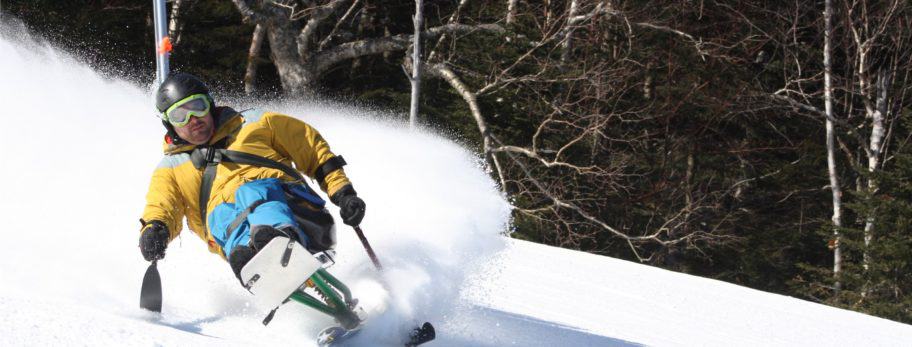
We offer the largest variety of program opportunities and unique, specialized equipment. Vermont Adaptive promotes independence and furthers equality through access and instruction to sports and recreational opportunities including alpine skiing, snowboarding, and other winter sports; kayaking, canoeing, stand-up paddle boarding, sailing, cycling, hiking, rock climbing, tennis, horseback riding, environmental programs, CORE Connections wellness retreats, and more.
We serve clients of all abilities with physical, cognitive and emotional/behavioral disabilities from all over the world in three locations in Vermont during the winter – Killington Resort and Pico Mountain in Killington; Sugarbush Resort in Warren; and Bolton Valley Ski Area in Bolton. Summer programs are provided state-wide. Many of our programs include environmental education, wellness, and special programs designed specifically for veterans.
With nearly 400 active volunteers, plus generous partners and sponsors, and an amazing base of clients and friends, Vermont Adaptive Ski & Sports has been at the forefront of sports and recreation for those with disabilities for more than 30 years.
Vermont Adaptive Ski & Sports is committed to empowering individuals with disabilities. We promote independence and further equality through access and instruction to sports and recreational activities.
We believe sports and recreation provide a physical, mental and social experience that is immeasurable in promoting self-confidence and independence in an individual. To that end, we extend an enormous thanks to our affiliates, sponsors, and partners who believe in our mission and vision, and who afford us the opportunity to bring sports and recreation to our clients’ lives.


Sign-up for our e-mail list:
Sign Up!partners




2023 VERMONT ADAPTIVE SPONSORS